

What to Fix and What Not to Fix When Selling a House: Pro Tips to Maximize Your Sale Price

Hey there, fellow homeowner!
If you’re preparing to sell your home in 2026, this guide is for you. You may be moving across the country for a new job or cutting back because the kids have moved out. No matter the reason, it can feel like a full-time job just to figure out what to fix before selling a house. Let’s talk about what not to fix when selling a house.
This 2026 guide focuses on the U.S. real estate market and explains why you don’t need a perfect home to sell successfully.
This guide will help you set priorities in a smart way. We’ll talk about what buyers really want in 2026, as well as specific repairs to make before selling a house and ones you can skip. We’ll also give you tips on how to sell a house that needs major repairs. You’ll be able to sell better, save time, and make more money by the end.
Table of Contents
Why You Don’t Have to Fix Everything Before Selling Your House
Imagine you’re selling a typical suburban three-bedroom home. Thoughts like, “Should I paint the living room? What about that creaky floorboard in the hallway? And those kitchen counters look a bit dated?” It’s normal to want your home to look its best, but here’s the truth: you don’t need to fix everything before you market it.
If you worry too much about what to fix up when selling a house, it could lead to more costs and delays.
What’s going on here in 2026? After the pandemic, the U.S. real estate market has stabilized. Buyers aren’t as desperate as they used to be because there are more homes on the market. Builders are increasing production, and baby boomers are finally retiring and selling. They don’t want perfection; they want value.
Recent market studies show that homes that are “move-in ready” but not too customized sell faster. This is because buyers love being able to make things their own. Plus, virtual staging and 3D tours are becoming commonplace, so you can show off potential without having to make any real changes.
Return on investment (ROI) is the main idea here. Not everything you fix before selling a house is worth it. Like, a full kitchen update may cost $30,000 but only increase the value of your home by $20,000. That’s a loss!
On the other hand, fixing small issues like a leaky faucet before you sell your home can keep buyers from offering too little during talks. It is vital to know what not to fix when selling a house so you don’t make those errors.
We’ll talk about what buyers want, give you lists of things to do and not to do, and even include a ROI table to help you make your choice. Don’t forget that selling a house is more about planning than hard work. You could save a lot of money and still get top dollar by skipping the things that aren’t necessary.
The psychological side is another thing to think about. Thanks to the internet, buyers in 2026 have access to a huge amount of information. They expect some wear and tear, especially in older homes, and many of them have set aside money for changes to be made after the sale.
If you fix too many things, you might price your home out of the market or get buyers who are too picky and will still find problems. Instead, be open about problems—it’s the rule in most states—and let the market work its magic.
This method not only makes the process go faster, but it also makes you feel less stressed. Take a big breath; we’re here to help you figure out what to repair before selling a home without making it a nightmare to fix up.
What Buyers Really Want in 2026 (And Why It Changes What to Fix)
This is what it’s like to buy a home in the US in 2026: practicality meets potential. There was a time when people would bid on anything with a roof and win. Now that the economy is stable and people can still work from home, what buyers really care about comes down to a few key factors that can make or break a sale.
- Functionality is the most important thing. People who are buying houses want them to match their daily lives. For instance, they need open floor plans for family gatherings, home offices for those who work from home, and energy-saving features to keep energy prices from going up.
- In places like the Sun Belt, where heat waves show up more regularly, updated HVAC systems or setups which are geared up for solar power are big draws. But this has something to do with what not to fix when selling a house: if your home already has these basics, don’t change them just to make it look better.
- Location and community features are must-haves. Being close to good schools, parks, and public transportation is very important, especially for the large number of millennial and Gen Z buyers who are joining the market.
- In 2026, buyers are looking for neighborhoods that could grow because cities like Detroit and Austin are reviving their downtown areas. Small cosmetic issues won’t stop them if your house is in a hot spot.
- Another big one is affordability. Home prices are staying the same, but they are still very high along the coast, so buyers are looking closely at value. In other words, they prefer homes where the price matches the condition. This means that they don’t mind things to fix before selling your house if it means a lower entry point.
- This also has to do with energy efficiency. Insulated windows or smart thermostats can change people’s minds, but only if they’re already there or easy to add.
- Trends are coming up for sustainability and resilience. After the weather events of 2025, buyers in flood-prone areas like Florida and wildfire zones in California are asking about stronger buildings or flood barriers. But that doesn’t mean you have to put them up yourself; just talking about the risks and the good things (like a recent roof check) is enough.
Ignoring these priorities is often what stops a house from selling. Listings that are too expensive and don’t have modern must-haves, like bad insulation in cold areas, stay on the market for too long.
On the plus side, houses which are clean, secure, and useful sell fast. So, if you need to decide what to fix when selling a house, make sure they’re in line with what buyers need: focus on the basics that make the house more livable without making it too unique.
Buyers also want things to be clean. With home search gear that use AI in 2026, they can quickly spot red flags. You’ll gain trust if you provide full data. In the end, understanding these tastes will help you make a decision what to repair before selling a home, ensuring that your hard work will pay off.
What Not to Fix When Selling a House – Detailed List to Save Thousands
Now let’s get down to business and talk about what not to fix when selling a house. This list will keep you from wasting money you don’t need to. Buyers expect some personalization options in the fair market of 2026, so don’t try to make everything perfect. We’ll go through each one and give you real-life examples to show why skipping these will save you a lot of money.
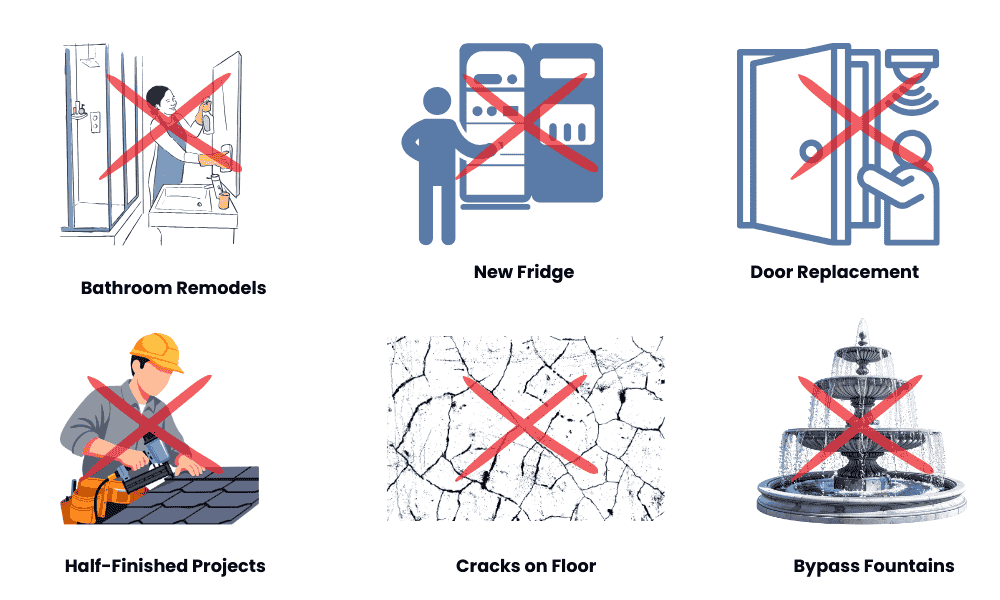
- Major Kitchen & Bathroom Remodels Do not take out kitchens or bathrooms unless they are so terrible that you cannot stay in them anymore. A complete kitchen redecorate could cost between $25,000 and $50,000, but the return on investment is commonly only 60% to 80%. People who buy these locations often change them to suit their very own tastes. For example, you may love that modern farmhouse sink, but the next proprietor might like modern simplicity instead. Clear out and clean up instead; that’s enough for most people.
- Trendy or Bold Cosmetic Changes Bright paint colors, wallpapers that make a statement, or strange fixtures? Skip them. What not to fix when selling a house includes anything that screams “personal style.” Neutral tones appeal widely; something else may want to turn off half of your potential buyers. If you’ve got a shiny accessory wall in your living room, for example, paint it white. But do not cross any further than that.
- Replacing Working Appliances Don’t get a new fridge if the one you have from 2015 still works great. Even although they cost more than $1,000, people frequently purchase new ones anyway, especially considering that energy rebates might be available in 2026. The same goes for washers and dryers: leave them by myself so long as they paintings.
- Full Window or Door Replacement Don’t bother replacing your windows and doors except they are drafty or broken. High-quality vinyl windows might cost $10,000 for a whole house, with ROI around 70%. In warmer locations just like the Southeast, customers won’t mind older homes so long as they have top insulation.
- Minor Cosmetic Wear & Small Holes Small flaws in the way it seems, like dents inside the wall, spots on the carpet, or faded grout? These are classic examples of things not to fix before selling house. Only if they’re huge. Tiny nail holes from pictures give the house charm and show that it was lived in. Professional cleaning or a quick steam can handle spots without full replacements.
- Half-Finished Projects Starting a basement finish and leaving it? That’s worse than leaving it unfinished. Buyers see dollar signs and problems. If you realize you cannot do it proper, inform them and set the price successfully.
- Expensive Landscaping Upgrades Trim hedges and mulch beds for curb attraction, but bypass including fountains or patios. These can rate $5,000-$15,000 with low ROI, as tastes range wildly. A well-manicured lawn is first-class.
- Non-Urgent Structural Work Small cracks in the floor or walls caused by settlement that aren’t safety issues? Tell people, but don’t fix. Major foundation work is pricey ($10,000+) and often doesn’t add equal value. In places like California that are prone to earthquakes, buyers already expect checks.
- High-End Smart Home Installations Smart home systems are cool, but if yours isn’t integrated, don’t add one. Compatibility problems could frustrate buyers who prefer their own brands.
By avoiding these, you’re aligning with sell house with major repairs strategies—focus on disclosure over perfection. This list will help you make smart investments that will keep your sale on track.
What to Fix Before Selling a House – High-Impact Repairs Buyers Expect
Shifting gears, let’s study what to fix before selling a house. These are the high-impact items that avoid red flags during showings and inspections. In 2026, buyers want reliability because the economy is unclear. Getting those proper can mean the difference between a brief sale and the house sitting available on the market for months.
- Safety risks first: Hire a expert for $500 to $2,000 to fix electrical issues like flickering lights or old panels so you don’t start a fire.
- Plumbing troubles: Fixing leaks or low water strain is critical. A tap that drips may not appear like a huge deal, however it is a sign of carelessness.
- Curb appeal basics: Power-wash the walls, paint the front door a heat color, and make sure the mailbox isn’t always rusty. The “wow” aspect comes from these small adjustments that value much less than $1,000.
- Deep cleaning & decluttering: Get rid of all the junk and smooth every corner and cranny.
- Fresh neutral paint: Use neutral paint to fix up walls that are scratched—$1,000 for the whole house can give you a 100%+ return on your investment. Fix big holes; yes, do you have to patch holes when selling house? Of course, for a classy look.
- Roof & gutters: Replace any missing shingles or gutters to hold water from destructive the roof. A entire new roof should only be put on if it is seriously broken; otherwise, small maintenance will do.
- HVAC service: Service your heater and air conditioner once a 12 months; spending $300 to $500 will make sure they work well. This is crucial to customers in cold states like Minnesota.
- Minor kitchen & bath updates: Fix cabinet doors, replace handles, and re-caulk tubs. Those fixes will make it look better without a full renovation.
- Pest treatment: Rodents or termites? Treat proper away; issues that are not informed kill offers.
By making these things to repair before selling a house, you’ll make it greater appealing to both shoppers and inspectors, which will accelerate the remaining technique.
2026 ROI Table: What to Fix vs. What to Skip When Selling Your Home
Check out this improved ROI table for 2026 US averages to get a better idea of your options. Based on data, it compares popular projects to help you decide what not to fix when selling a house.
| Project | Decision | Est. Cost (National Avg) | Est. ROI | Quick Note |
|---|---|---|---|---|
| Garage Door Replacement | Fix | $4,000 – $5,000 | 268% | Huge curb appeal win – #1 ROI project in 2025 |
| Minor Kitchen Remodel | Fix | $25,000 – $30,000 | 113% | Update counters and hardware only |
| Siding Replacement (Vinyl) | Skip unless needed | $15,000 – $20,000 | 97% | Only if badly damaged |
| Full Bathroom Remodel | Skip | $20,000 – $28,000 | ~80% | Buyers want to choose their own |
| Roof Replacement | Fix if leaking | $25,000 – $35,000+ | ~68% | Must-do if failing |
| Window Replacement | Skip | $15,000 – $25,000 | 70% – 76% | Unless major energy loss |
| Landscaping Overhaul | Skip | $5,000 – $10,000 | 50% – 60% | Basic care is enough |
| HVAC Tune-Up | Fix | $300 – $500 | 100%+ | Prevents bigger problems |
| Interior Paint Touch-Up | Fix | $1,000 – $2,000 | 100%+ | Neutral colors sell fastest |
| Major Structural Repairs | Skip (disclose) | $10,000+ | 30% – 50% | Let buyer handle if not urgent |
Updated per 2025 Cost vs. Value Report national averages (Zonda / Remodeling magazine).
, home condition, materials and contractor.
Always get multiple local quotes for accurate planning.
This table shows strategic decisions, like skipping decks to fix garage doors for huge profits.
7 Must-Do Home Fixes Before Selling in 2026 (Non-Negotiable List)
Here is a quick list of 7 home fixes you must complete before selling. These are tried-and-true must-haves that are similar to what to fix before selling a house to make it stand out.
- Bring Life Back to a Dead Lawn
A patchy yard is an indication of neglect. Spend $300 to $500 to plant, feed, and water. This makes the outside of a house look much better in dry locations like Texas. - Replace Broken Windows and Screens
Cracks and tears can be constant for $200 to $500 each. It makes matters more secure and more efficient, that is important within the eco-friendly market of 2026. - Fix Mold and Water Damage Stains or musty smells
Fix it up professionally ($1,000 to $5,000) to keep away from health troubles and inspection screw ups. - Repair Leaky Faucets and Plumbing Drips or clogs
Plumbing repairs typically cost $200–$400 and hold larger problems like water payments or damage from happening. - Touch Up Paint and Patch Noticeable Holes
Neutral paints and patches fee $1,000 to $2,000 and make rooms sense new. Do you have to patch holes when selling house? For ones that can be seen, yes—to hide wear. - Clean and Repair Gutters If your gutters are clogged, it can damage your base. You can clean them for $150 or repair them for $300 or more. Important in locations that get numerous rain, just like the Pacific Northwest.
- Update Old Lighting Fixtures Replace old light bulbs with LEDs ($100 to $300) to carry your lights updated. Rooms which can be brighter sense bigger and friendlier.
These 7 home fixes you must complete before selling are non-negotiable for a successful list.
How to Sell a House That Needs Major Repairs in 2026
Selling a house that needs major repairs is possible in 2026’s forgiving market. Start with an intensive inspection ($400-$600) to spot issues like foundation cracks or previous wiring. Disclose the whole thing—honesty stops lawsuits.
Price strategically: Research comps and subtract repair estimates plus a saving (10-20%). For a $300,000 home desiring $50,000 in paintings, list at $230,000-$240,000.
Target the right customers: Investors, flippers, or DIY fanatics love fixers. Use phrases like “handyman’s special” in ads. Cash buyers or “we buy houses” companies offer quick closes, though at lower prices.
Market smartly: Professional photos showing positives (e.g., spacious lot) and virtual tours help. In hot markets like Phoenix, even repair-heavy homes sell if priced right.
Think about other options. Deals are sweetened by transferring a home warranty or getting the seller to pay for fixes. If regular deals take too long, auctions and iBuyers can help.
What stops a house from selling in this case? Not telling about problems—always be open. If you’re patient, you can sell house with major repairs and still make money.
What Makes a House Not Sell? Common Mistakes to Avoid in 2026
To keep away from common problems, it is critical to realize what stops a house from selling.
- Homes which can be priced 10% above the marketplace stay empty for months in 2026, making it one of the biggest mistakes.
- Virtual tours are turned off by bad presentation, like photos that are cluttered or poorly lit.
- Inspection problems, like leaks that weren’t told about, kill deals.
- The market moves more slowly in the winter in states with a lot of snow.
- Refusing to negotiate or being rigid about showings irritates agents.
- Marketing that doesn’t use modern tools, like 3D shows or social media, limits exposure.
- Problems in the neighborhood, like rising crime, can’t be fixed, but they should be understood in their proper context.
Take care of these right away: set the right price, stage the home well, and be open to keep the sale going.
FAQs: What to Fix Before Selling a House – Quick Answers
- What should I fix before I sell my house?
Toilets, safety items, and simple curb appeal are all important. - What should I fix up before I sell my house?
Small things like paint and hardware that look nice. - What should I fix when selling a house?
Leaks, electricity work, and HVAC maintenance. - What should I fix before selling house?
Get rid of crap, clean really well, and fix up walls. - Repairs to make before selling a house?
Lights, taps, and gutters. - Things to fix before selling house?
If the lawn, windows, or doors are broken. - Things to fix before selling your house?
Mold, broken screens, and water damage. - Things to repair before selling a house?
Roof repairs and changes to appliances. - What to repair before selling a home?
Dangers that were flagged for inspection. - 7 home fixes you must complete before selling?
Lawn repair, window fixes, and more—see the list above. - Sell house with major repairs?
Yes, through openness and fair prices. - What stops a house from selling?
Too much money spent, bad state, and bad advertising. - Do you have to patch holes when selling house?
For big holes, yes; for small ones, okay. - How to sell a house that needs major repairs?
Check, tell, set a low price, and go after backers.
Sell Smarter in 2026
As this in-depth 2026 guide comes to a close, remember that knowing what not to fix when selling a house is all about balance and strategy. You’ll set up your home for success in a market that values authenticity over perfection if you skip low-return projects and focus on basics like the 7 home fixes you must complete before selling.
The tips in this article will help you feel confident whether you’re making small changes or trying to sell a house that needs major repairs.
Don’t feel overwhelmed—consult a trusted real estate agent, do the math on your return on investment, and list with pride. If you sell better, you’ll make more money and have less trouble.
Are you ready to move? Start today,