
Key Takeaways: If you are trying to figure out how to sell a house in Utah without an agent, you are not alone. Every month thousands of homeowners in Salt Lake City, Provo, Ogden, St. George, Lehi, and Park City search for “utah for sale by owner” because they want to save the listing commission.
It can be done. Utah is actually one of the more straightforward states to sell for sale by owner. No attorney required, no transfer tax, and you get to pick the title company. But it is not just putting a sign in the yard and listing on KSL. There is a specific process in Utah, with specific forms, disclosure rules, and buyer expectations. Get it right and you can save $14k-$17k. Get it wrong and you can sell for less than market or create legal problems after closing.
This guide breaks down exactly how to sell a house by owner in Utah in 2026, step by step.
Table of Contents
Is Utah a good state to sell for sale by owner?
Utah has some real advantages for for sale by owner sellers.
First, KSL.com. Nowhere else in the country does one local classified site matter this much. Buyers in Salt Lake County, Davis County, Utah County, Weber County – they check KSL Homes every day. You can get serious showings from KSL alone if your photos and price are right.
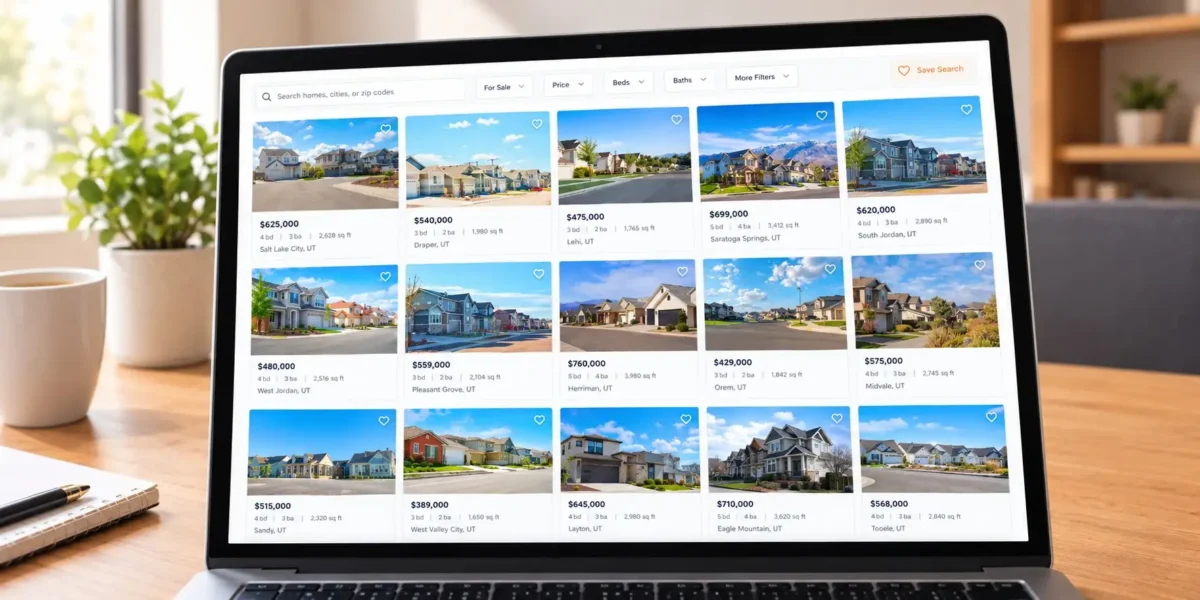
Second, closing is simple. Utah does not require an attorney to close. A licensed title company handles the whole thing – title search, holding earnest money, preparing settlement statements, recording the deed with the county. As the seller, you actually get to choose the title company. That’s a Utah custom.
Third, Utah uses standardized forms. Most deals use the Utah Association of Realtors Real Estate Purchase Contract, called the REPC. It’s long, but every lender, agent, and title officer knows it. You can legally use it as a for sale by owner seller and title companies prefer it.
Fourth, there is no real estate transfer tax in Utah. Many states charge 1% or more just to transfer ownership. Utah doesn’t.
Why it’s tougher in 2026:
Mortgage rates are back near 7%, hitting a 15-month high. When rates are high, buyers are more careful, they lean on agents more, and they have less buying power. Homes are sitting longer too. Statewide average days on market is 50-65 days right now depending on county, versus under 20 days in 2021. Pricing and marketing have to be sharp.
For sale by owner tends to work best in Utah when the house is in good condition, priced right, located in a populated area like Salt Lake Valley, Utah Valley, or Washington County, and the seller has 10-15 hours a week to manage calls, showings, and paperwork.
Pros and cons of selling a home in Utah
- Save the listing commission. Average listing side commission in Utah is about 2.78%. On a $575,000 house – close to the median now – that’s around $16,000 you keep.
- Full control. You set the price, showing schedule, open house times, and you negotiate directly with buyers. No filtered feedback.
- Direct communication. You can explain the house better than anyone – the winter sun in the kitchen, the quiet street, the trail access, the new water heater, why the basement stays warm.
- Flexible negotiation. You can move faster without two agents relaying messages back and forth.
Cons you need to be honest about:
- Pricing is hard and costly if you miss. Data from the National Association of Realtors consistently shows for sale by owner homes sell for less than agent-listed homes. Even a 3-5% price difference on a $575k home is $17k-$28k, which wipes out your commission savings.
- It’s time-consuming. Photos, listing description, KSL listing, flat fee MLS listing, phone calls, showings, pre-qualifying buyers, REPC paperwork, seller disclosures, inspection negotiations, title coordination – it’s a part-time job for 60-90 days.
- Legal liability. Utah requires a Seller’s Property Condition Disclosure. If you know about a defect and don’t disclose it – roof leak, basement moisture, unpermitted addition, sewer backup – you can be sued after closing.
- Smaller buyer pool if you are not on MLS. About 88% of buyers in 2025 used an agent. If you are not on the local MLS and not offering any compensation to buyer’s agents, most of those buyers will never see your home.
Utah legal requirements for sale
You don’t need to memorize Utah code, but you must get these five things right when selling a home in Utah.
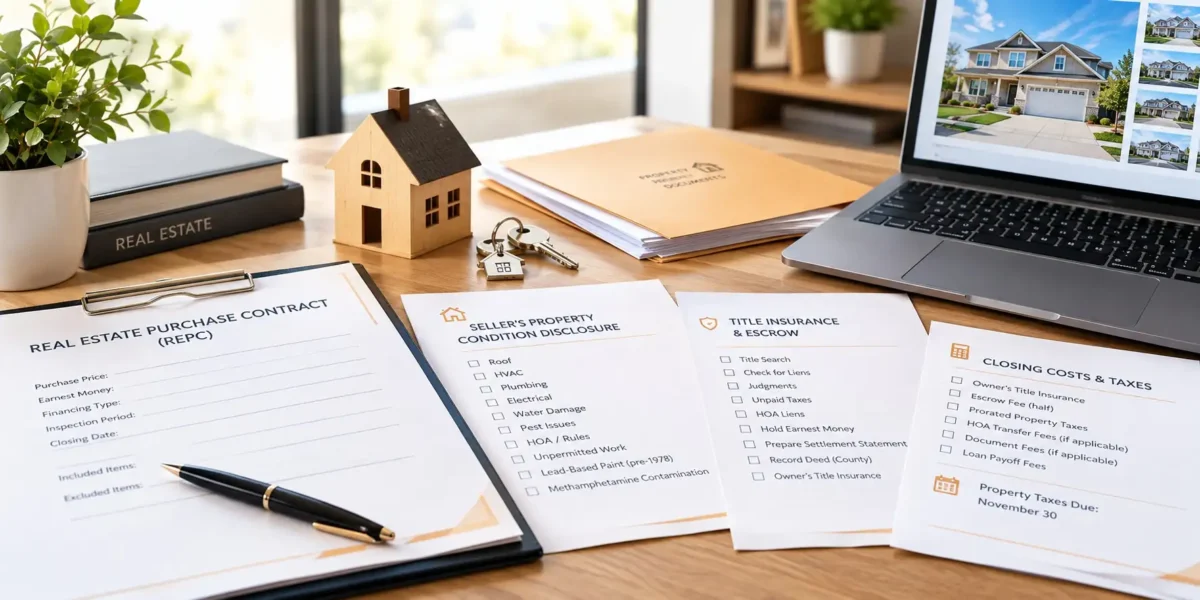
1. Seller’s Property Condition Disclosure. This is mandatory for almost all residential sales in Utah. You must fill it out completely and deliver it to the buyer within the deadline you set in the REPC, usually 5-7 days after acceptance. You must disclose everything you know – past water damage, roof age and leaks, HVAC issues, plumbing leaks, pest issues, boundary disputes, HOA dues and rules, unpermitted work, noise issues. Utah also has specific disclosures for lead-based paint if your home was built before 1978, and for methamphetamine contamination if you have knowledge.
Don’t leave lines blank as “unknown” if you actually know the answer. That is how sellers get sued in Utah.
2. Real Estate Purchase Contract – REPC. This is the binding contract. Use the current Utah Association of Realtors REPC form. It covers purchase price, earnest money amount, financing type, seller disclosure deadline, due diligence deadline, which is the inspection period, financing and appraisal deadline, settlement deadline, what is included and excluded like appliances, shed, water rights, solar panels, and who pays closing costs. Lenders and title companies expect this form.
3. Earnest money. In Utah earnest money is typically 1-3% of price and is deposited with the title company, not directly to you. It must be deposited within 4 calendar days of acceptance. It goes into escrow. If the buyer cancels during their due diligence period for any reason, they get it back. If they default after contingencies expire, you may be entitled to keep it.
4. Title insurance and escrow. In Utah the seller customarily chooses the title company. The title company runs a preliminary title report, checks for liens, judgments, unpaid taxes, HOA liens, holds earnest money, prepares settlement statements, and records the deed with the county recorder. As seller you typically pay for the owner’s title insurance policy.
5. Closing costs and taxes. Utah has no state transfer tax, which saves you money. You will still pay owner’s title insurance, your half of the escrow fee, prorated property taxes, HOA transfer and document fees if applicable, and any loan payoff fees. Property taxes in Utah are due November 30.
Utah does not require you to hire a real estate attorney to sell, but many for sale by owner sellers pay a flat fee of $500-$1,495 for an attorney to review the REPC, disclosures, and closing documents. For a $500k+ transaction, it is inexpensive protection.
How much does it cost to sell a house in Utah?
- Home prep and minor repairs: $500 – $4,000. Paint is the highest ROI.
- Professional real estate photos: $175 – $350. In Utah where new construction has perfect HDR photos, dark phone photos kill showings.
- Drone photos if you have a view, large lot, or RV parking: $50-$150 extra.
- Flat fee MLS listing that gets you on UtahRealEstate.com, Zillow, Realtor.com, Redfin: $99 – $500. Check if a multiple listing contract is right for you before you pay.
- KSL.com premium listing: $0 for basic, $40-$80 for premium placement.
- Yard sign with QR code to tour: $30 – $80.
- Pre-listing appraisal: $400 – $550. Optional but highly recommended for pricing.
- Title insurance – owner’s policy seller pays: $700 – $1,200 depending on price.
- Escrow / settlement fee – seller’s half: $500 – $900.
- HOA transfer and document fees: $0 – $500.
- Attorney document review – optional: $500 – $1,495 flat fee at closing.
If you do not offer any compensation to buyer’s agents, total cash cost for a $575k house is roughly $2,500-$5,000.
If you offer 2% to 2.5% to a buyer’s agent, add $11,500-$14,375. So total $14k-$19k versus $28k-$34k if you paid a full listing agent at 2.78% plus buyer side. That’s where the savings come from.
Step by step: How to sell a house in Utah by owner
Step 1 – Decide if for sale by owner is right for your situation
This route works when you have time, you are comfortable negotiating face to face, your house is in average to good condition, and you are in an area with strong buyer demand. If you have a buyer already lined up – neighbor, friend, family – it is almost always worth doing. If you live out of state, are going through a difficult divorce, or have a highly specialized property, consider at least flat fee help.
Step 2 – Prepare the house
Utah buyers are used to new construction, especially in Lehi, Saratoga Springs, Herriman, Eagle Mountain, St. George. So existing homes need to feel clean and bright.
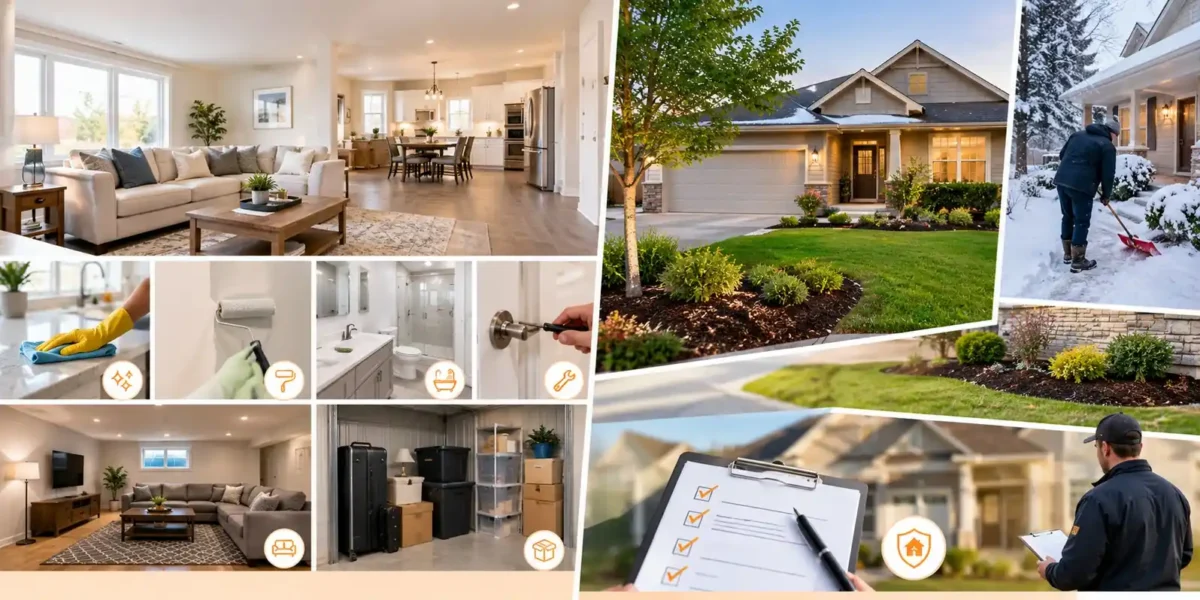
Inside: Declutter aggressively. Rent a small storage unit for extra furniture, seasonal gear, and boxes. Deep clean everything – baseboards, windows, appliances, bathrooms. Repaint bold or dark colors to neutral like agreeable gray or alabaster. Fix small things – leaky faucets, loose handles, cracked outlet covers, but first read what not to fix when selling a house so you don’t waste money. Stage lightly – define basements, which are huge in Utah, with a couch, rug, and lamp so buyers understand scale.
Outside: Mow, edge, fresh mulch, trim shrubs. In winter, shovel, de-ice walks, make sure exterior lights work because many showings happen after 4:30pm when it is dark. Curb appeal in Utah winter is simply “does this home look cared for?”
Consider a pre-inspection for $350-$500 if your home is 15+ years old. It lets you fix issues before a buyer finds them and strengthens your disclosure.
Step 3 – Get title sorted early
Call 2-3 title companies and ask for a preliminary title check. Tell them you are selling for sale by owner. They will check for old HELOCs that were paid off but never released, judgment liens, unpaid taxes, or vesting issues. Better to find and fix now than 10 days before closing.
Step 4 – Price your Utah home correctly
This is the most important and most difficult step when selling a home in Utah by owner.
Do not rely on Zestimate alone. Zillow cannot tell finished vs unfinished basement, view lot vs interior lot, or 3-car garage vs 2-car – all big value drivers in Utah.
Do this:
Go to Zillow, Redfin, Realtor.com, and UtahRealEstate.com. Search SOLD homes in last 90 days within 0.5 miles, same bedroom/bath count, +/- 200 square feet, same style – rambler vs two-story matters a lot in Utah. Filter by similar condition and lot size.
Then search PENDING and ACTIVE listings. Those are your current competition.
Check price per square foot but don’t live by it. In Utah, lot size, view, basement finish percentage, garage count, and HOA vs no HOA swing price per square foot significantly.
Get a professional opinion. Best is a pre-listing appraisal for $400-$550. You get a defensible value. Second best is a Broker Price Opinion for $150-$300. Many flat fee MLS companies in Utah include a CMA report if you ask.
If you overprice by even 3% in today’s neutral market, you will sit 60+ days, get price cut flags on Zillow, and buyers will use that to lowball you. If you underprice by 3%, you leave $17k on a $575k home on the table.
Step 5 – Professional photos and video
Hire a real estate photographer who shoots HDR, wide angle, and drone if needed. You need 30-40 photos – all bedrooms, bathrooms, kitchen from two angles, living spaces, basement, garage, yard, front exterior, bonus spaces. A 2-minute video walkthrough helps a lot on KSL and Facebook.
Step 6 – Write a Utah-specific listing description
Buyers want specifics only an owner would know.
Use this structure: Hook + Key Stats + Utah Lifestyle + Recent Updates + What Conveys.
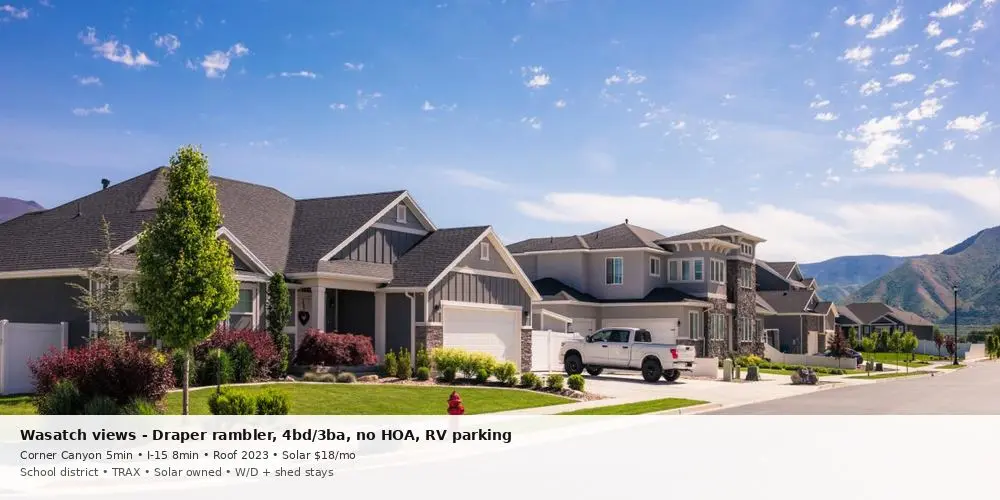
Example: “Wasatch views from the kitchen – 4-bed, 3-bath Draper rambler with fully finished basement, no HOA, RV parking, 3-car garage. 5-minute walk to Corner Canyon trails, 8 minutes to I-15. New roof 2023, water heater 2024, paid-off solar that conveys – power bill $18 last month. South-facing deck, finished basement with 9ft ceilings.”
Include school district, HOA amount, distance to TRAX or FrontRunner if relevant, solar ownership vs lease details, water softener, and what stays – refrigerator, washer/dryer, shed, extra freezer.
Step 7 – List where Utah buyers actually search
- Flat fee MLS service. This puts you on the Wasatch Front Regional MLS, Iron County MLS, or your local MLS. It syndicates automatically to Zillow, Redfin, Realtor.com, Homes.com, and UtahRealEstate.com. This is how you reach the 88% of buyers who use agents. Cost $99-$500.
- KSL.com Homes. Create a full listing with all photos, detailed description, and video link. Pay for premium bump for $40-$80 to stay at top. KSL buyers are often serious and local.
- Zillow For Sale By Owner direct. Free, additional exposure.
- Facebook Marketplace and local Utah Facebook groups. If you want to learn how to find buyers for real estate fast, start with these groups. Also neighborhood groups.
- Yard sign with QR code linking to your photo tour or Zillow 3D tour. People still drive neighborhoods in Utah.
Step 8 – Manage showings and pre-qualify buyers
Use an online scheduler like Calendly or simple text scheduling. Require a pre-approval letter if buyer needs financing. At 7% rates, many buyers are at the edge of qualification, so you don’t want to waste two weeks with someone who can’t get a loan.
For safety, have another person home during showings, check ID, use a lockbox with changing codes.
Ask for feedback after every showing. If three buyers say the same thing – basement feels damp, price feels high, layout confusing – adjust.
Step 9 – Receive offers and negotiate the REPC
Offers will usually come on the Utah REPC form. Review carefully:
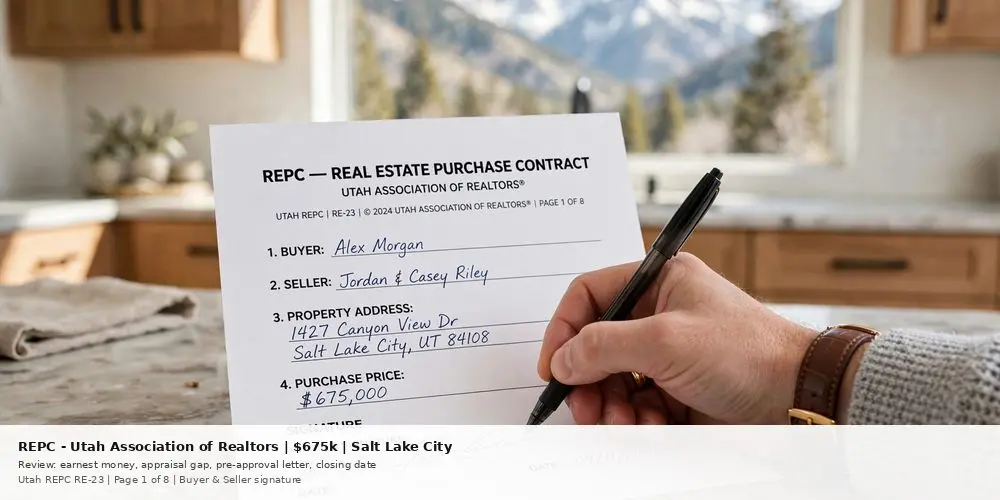
- Price and financing type – cash, conventional, FHA, VA.
- Earnest money amount and deposit deadline.
- Seller disclosure deadline – your deadline to deliver disclosures.
- Due diligence deadline – buyer’s inspection period, typically 7-14 days.
- Financing and appraisal deadline.
- Settlement and closing date.
- What buyer asks you to pay – closing costs, home warranty.
- Inclusions and exclusions – what stays.
- Contingencies – is offer contingent on sale of buyer’s home?
Don’t automatically take the highest price. A $560k cash offer with no appraisal contingency and 21-day close can net more and be safer than a $575k FHA offer with 3% seller concessions and sale contingency.
Counter everything in writing. Initial every change.
Step 10 – Open escrow and deposit earnest money
Once you accept, deliver signed REPC to your title company within 24 hours. Buyer has 4 calendar days to deposit earnest money with title. Title opens escrow.
Step 11 – Deliver disclosures and handle due diligence
Within your disclosure deadline, provide Seller’s Property Condition Disclosure, lead-based paint disclosure if pre-1978, HOA documents, CC&Rs, budget, any solar agreements, water share certificates, leases, and any inspection reports you have.
Buyer then has due diligence period to do home inspection, radon test – very common in Utah – sewer scope for older homes in Salt Lake City, Ogden, Provo, and appraisal. Buyer can cancel for any reason during due diligence or ask for repairs or credit. You are not required to make repairs, but buyer can walk if you don’t negotiate.
Most inspection negotiations in Utah settle on a credit toward closing costs rather than you doing repairs.
Step 12 – Appraisal and financing
If buyer is financed, lender orders appraisal. If appraisal comes in low, you have three options: lower price to appraised value, buyer brings cash to cover gap, meet in middle, or cancel. Good initial pricing with solid comps reduces low appraisal risk.
Respond quickly to any lender conditions.
Step 13 – Clear to close with title company
Title will send you preliminary settlement statements 2-3 days before closing. Here is how to speed up home buying timeline so you don’t get delayed at the end. Review payoff amounts, prorated taxes, HOA prorations, commissions. Confirm wire instructions by phone – wire fraud is real. Arrange final walk-through with buyer, typically 24 hours before closing.
Step 14 – Closing and recording
In Utah closing is usually done via separate signings. You sign Warranty Deed, settlement statement, and affidavits at title company. Buyer signs loan documents separately. Once buyer funds and title records deed with county recorder, you get wired your proceeds, usually same day or next business day. Hand over keys, garage remotes, door codes, and manuals.
Marketing that actually works
- Lead with KSL. Use all photo slots, add video walkthrough, and update your listing every few days to stay at top of newest search.
- Use local language. In description include “no HOA,” “RV parking,” “Wasatch views,” “finished basement,” “close to TRAX,” “FrontRunner,” “Silicon Slopes,” “Corner Canyon trails,” “Murdock Canal Trail.” Those are actual search terms Utah buyers type.
- Seasonal strategy. If selling November-February, use exterior photos taken before snow plus one current snow photo. Emphasize heated driveway if you have it, south-facing, energy bills, and easy winter access. Keep interior bright with all lights on for showings.
- Social sharing. Share virtual tour on Facebook and Instagram. Utah neighborhoods have strong community pages – ask admin permission to post. Open houses – Saturday 11am-2pm and weekday twilight 5:30pm-7pm tend to get most traffic. Use these 32 proven open house ideas to get more turnout.
Common mistakes when selling a house in Utah without an agent
- Pricing based on what you need for next purchase, not what market says.
- Using phone photos with clutter, dark rooms, or toilet seats up.
- Not being on MLS. You lose most agent-represented buyers.
- Leaving seller disclosure blank or writing “unknown” when you actually know about an issue.
- Not pre-qualifying buyers. Wasting weeks with a buyer who can’t get approved at current rates.
- Refusing to negotiate minor repair credits during due diligence and losing deal over $1,000-$2,000.
- Forgetting Utah-specific items – water rights for larger lots, solar panel lease vs owned status, HOA transfer fees, and Park City resort area additional fees.
Should you offer buyer’s agent compensation after the NAR settlement?
Since August 2024 you cannot advertise buyer agent compensation on the MLS. But you can still offer it and negotiate it inside the REPC. In 2026 most Utah sellers doing for sale by owner are handling it this way.
Why still consider offering? Most Utah buyers still use agents, and their agents expect to be paid. If you offer zero, many agents will skip your home or their buyer must pay their agent out of pocket, so they will offer you less to cover that cost.
Common approach now in Utah:
- State in private remarks to agents: “Seller will consider compensation to buyer’s brokerage, to be negotiated in REPC.”
- Offer 2% to 2.5% as a seller concession if buyer asks, negotiated case by case.
- Offer $0 but be prepared for fewer showings and lower offers.
In very competitive micro-markets like Daybreak, Lehi, South Jordan, St. George with low inventory, you can test $0 for a week. In slower markets, offering compensation from day one tends to get more showings.
When to hire help
For sale by owner does not mean you have to do everything alone. Smart sellers in Utah hire:
- Flat fee MLS company: $99-$500 for MLS exposure and syndication to Zillow, Redfin, Realtor.com, UtahRealEstate.com.
- Real estate attorney: $500-$1,495 flat fee at closing to review REPC, addenda, disclosures, deed.
- Title company: They are your quarterback. Pick one that does a lot of for sale by owner deals and explains things clearly.
- Professional photographer, appraiser, inspector: Pay for expertise where it directly impacts sale price.
That is still $10k-$14k less than a full listing commission on a median Utah home.
FAQ
Do I need a lawyer to sell a house by owner in Utah?
No by law. A title company can close the sale. Many sellers still hire an attorney for flat-fee review to reduce liability, especially for REPC and disclosures.
What disclosure forms are required in Utah?
Seller’s Property Condition Disclosure is required for almost all residential sales, plus federal lead-based paint disclosure if home built before 1978, and HOA documents if applicable. Disclose any known meth contamination.
How long does for sale by owner take in Utah?
If priced correctly, 60-100 days from listing to closing is typical. Agent-listed homes average 50-65 days on market in 2026. For sale by owner often takes a bit longer due to less exposure.
Can I sell my Utah house if I still have a mortgage?
Yes. Title company orders payoff from your lender. Your equity is sale price minus mortgage payoff, closing costs, and any buyer agent compensation you offer.
What is earnest money in Utah?
Usually 1-3% of price, held by title company in escrow. If buyer defaults after contingencies expire, you may keep it. If buyer cancels during due diligence, they get it back.
Do I have to pay closing costs as for sale by owner seller in Utah?
Yes. Expect owner’s title insurance, your half of escrow fee, prorated taxes, HOA fees. No transfer tax. Budget 1-2% plus any buyer agent compensation you decide to offer.
Do I have to pay capital gains tax when selling my house in Utah?
If you’ve lived in the home 2 of the last 5 years, you can exclude up to $250k single / $500k married from federal capital gains. Check the current IRS rules for capital gains when selling your home to see if you qualify.
Is KSL or Zillow better for Utah for sale by owner?
Both, but KSL.com is uniquely powerful in Utah. Combine KSL plus flat fee MLS that syndicates to Zillow, Redfin, and Realtor.com for maximum coverage.
What if buyer asks me to pay their closing costs?
Common with FHA and VA buyers in high-rate environment. You can agree, counter, or decline. It is negotiated in REPC. Offering 2-3% concession can attract financed buyers without dropping list price.
Final checklist before you list
- Preliminary title check ordered, any liens cleared
- Repairs done, home deep cleaned and decluttered
- Professional photos and video tour ready
- Price set with sold comps from last 90 days, plus appraisal or broker price opinion – not just online estimate
- Seller disclosure filled completely and honestly
- Current Utah REPC form ready
- Title company selected – you choose in Utah
- Showing schedule and pre-approval requirement decided
- Plan for buyer agent compensation decided
- Yard sign and lockbox ready
Selling a home in Utah by owner can absolutely work when you understand how Utah works – REPC, disclosure rules, title process, and how Utah buyers actually search with KSL and the MLS.
Focus on four things: prep, pricing that is not emotional, photos that are bright and professional, and paperwork you don’t skip.
Do those right, get on KSL and the MLS, and use a good title company plus flat-fee attorney review for protection. You can save thousands while keeping control of your sale.
Disclaimer: This guide is for educational purposes and is not legal, tax, or financial advice. Utah forms and laws change. Check current Utah REPC and disclosure forms and consult a Utah-licensed real estate attorney and title company for your specific transaction.