
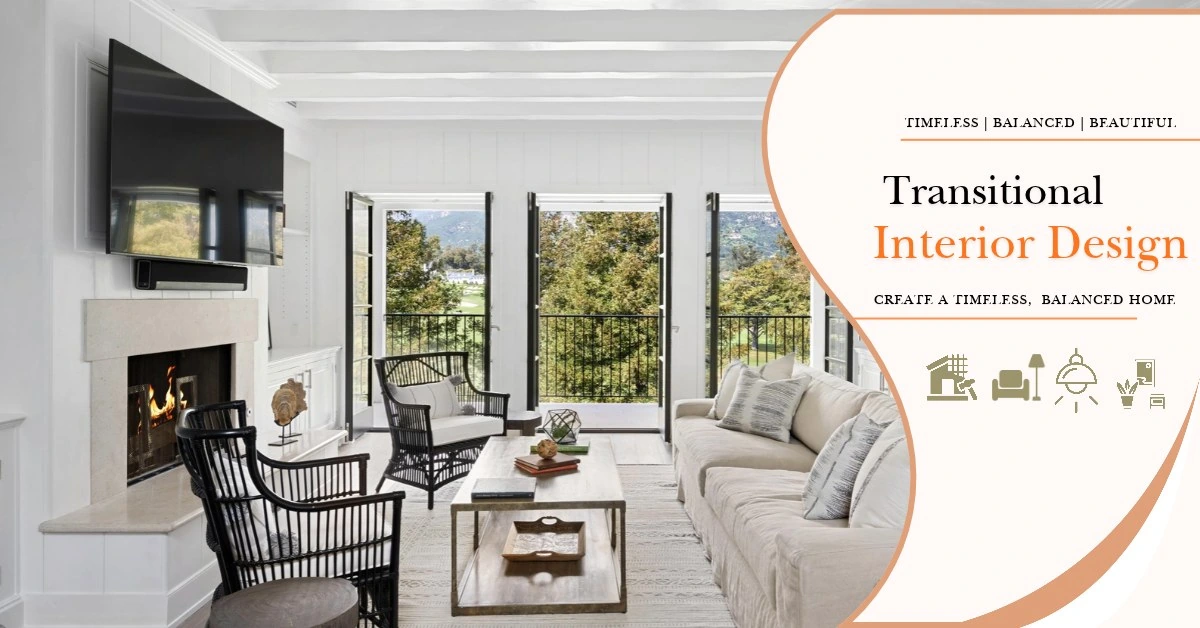
Why every lovely house looks both familiar and new
There’s a reason why you feel at ease as soon as you walk into some homes. They are not cold and stuffy like museums. They’re not heavy or fancy either. Without a doubt, they are right. This is mostly a feeling that comes from changing interior design.
Right now, transitional interior design is the style that interior designers want to work with the most because it solves a problem that most homeowners have. It might be stiff to be pure traditional. Modern art that is pure may be striking. To be transitional is to be right in the middle.
It builds on what we love about American interior design but makes it lighter and more current.
You should read this guide. We’re going into great detail about the past, the exact recipes, the furniture, the colours, and the plan for each room.
Table of Contents
What is transitional interior design?
The style of transitional interior design is a mix of old and new. It takes the comfort, warmth, and classic shapes of traditional style and combines them with the modern style’s clean lines, neutral colour scheme, and ease of use.
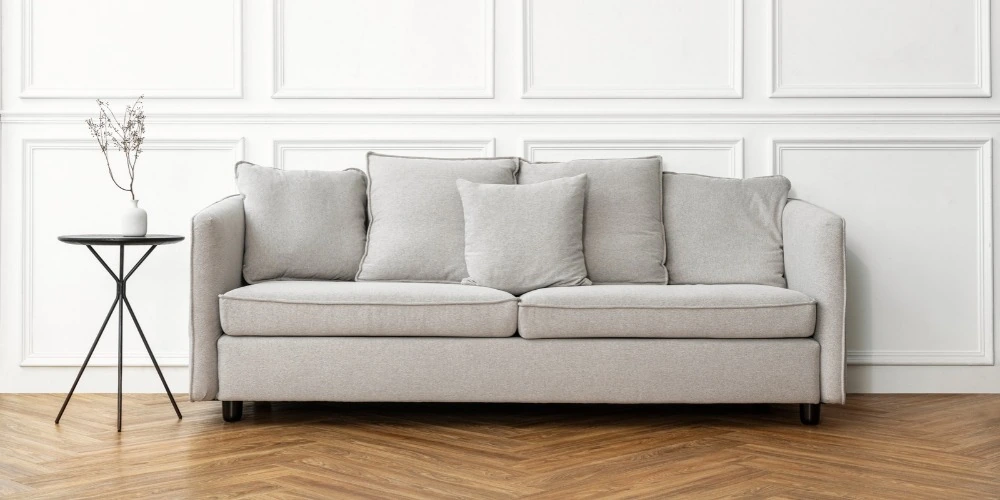
You could think of it as classic design for the modern world, similar to American style interior design with less heaviness.
An English roll-arm couch might be found in a transitional design room, but it will be upholstered in a light performance linen instead of a heavy damask. The walls may have traditional panelling, but they are painted a soft, warm white and there isn’t a lot of decoration. It has both an old wooden cabinet and a new, sculptural metal light.
In interior design, transition in interior design means the mindful change from old to new is the most important thing to keep in mind for transitional style interior design. Not a bunch of different Eras mixed together. It’s about getting people to work together. Don’t try to get attention. Everything is owned.
This is also where a lot of people get the term “transition spaces” mixed up. A transition space is the hallway that goes from your living room to your bedroom. The transitional style of interior design is its own style. This guide is about style, not the place.
A Brief History: How Transitional Became the Dominant Style
From the 1700s to the early 1900s, the traditional style was the most common. It had detailed designs, expensive woods, thick fabrics, and formal order.
In the 1920s and 1930s, ideas from the Bauhaus and the mid-century came together to create modern design. For utility, clean lines, and ease of use, it got rid of all of that.
Home decor magazines and designers working in major design markets began to notice in the late 1990s that buyers wanted both. They liked their comfortable, well-known furniture, but they wanted the open, clean look of modern homes.
The style of this bridge was called “transitional.” It grew after 2010 and became the standard for custom builders, developers, and high-end renovations because it looks good and suits most people. It doesn’t go with the flow, so even after five years, it will still look good.
Transitional vs Traditional vs Modern vs Contemporary
Online, these four names are used for each other, but they are actually very different.
In short: Tradition takes a quick look back. The modern era looks back to the early 1900s. It looks like real time right now. The old and the new work well together in transitional interior design.
Other blended styles like Japandi interior design ideas follow the same mix-old-and-new logic.
The 7 Core Elements of Transitional Design
If you get these seven things right, you can’t fail.
1. The 60-30-10 Neutral Rule
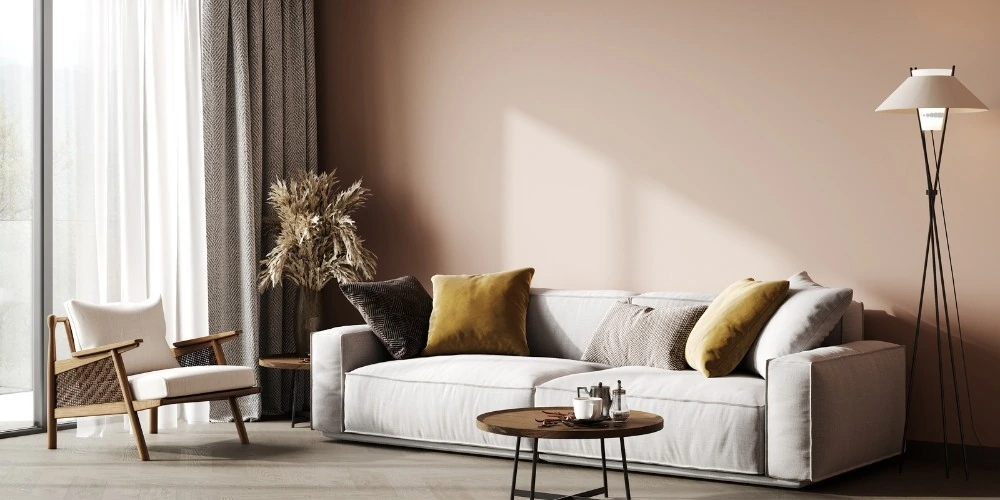
Neutrals are the building blocks of transitional style and create a warm neutral palette. Do not use cool, sharp neutrals. Instead, use warm, layered neutrals. 60% of your foundation should be warm white, greige, or taupe. neutrals that are 30% darker, like charcoal, warm wood, or soft black. 10% quiet voice. The atmosphere stays calm but not dull with this ratio.
2. How to Make Easy Silhouettes
Couches with arms, beds with cushions, and eating chairs with a gentle curve are all typical comfort furniture, but all the extras have been taken away. Not too many tufts, fringe, or fancy legs. A Lawson couch, a Shaker cabinet, and a Parsons chair are all examples of transitional furniture style.
3. Texture with many layers and strong colour
The texture does the job, and the palette doesn’t get in the way. Four different textures should be present in a room: smooth (like glass or metal), soft (like linen or wool), rough (like natural wood or jute), and smooth (like marble or leather). To make depth, you don’t need bright colours.
To capture this texture correctly, see these interior design photography tips.
4. Curated Symmetry and Balance
In classical architecture, balance is very important. The loves of today aren’t equal. For peace, transitional leans a little toward symmetry. There is a coffee table in the middle and two lights on side tables that match. The couches are also the same. It calms the eye.
5. Restrained Transitional Decor
Not as much, but good. On a console, use three big things instead of ten small ones. A big vase made of ceramic, two stacks of design books, and a sculpture. Art is huge and simple; it’s not a wall of small frames, but one big abstract piece.
6. Mixed Materials, One Metal Rule
In one room, you’ll see stone, metal, glass, and wood. The important thing is how the metal is made. Pick one main metal finish—brushed brass for a warm look, matte black for a modern edge, or polished nickel for a classic look—and use it on 80% of your hardware and lighting. You could also add a second metal in small amounts to make it stand out.
7. Focus on Comfort and Function
It is expected that people will live in temporary housing. These seats are deep and cosy. You can wash performance fabrics. It’s nice to walk on rugs. You should never waste a good space. The thing that sets it apart from showroom contemporary is that it’s livable.
The transitioning colour scheme: the exact colours that work
Put away all the white. It’s nice to wear transitional whites.
Base neutrals (like walls and a big couch):
- Benjamin Moore White Dove OC-17 and Sherwin-Williams Alabaster SW 7008 are both warm white paints.
- You can get Revere Pewter HC-172 and Agreeable Grey SW 7029 in greige.
- Grant Beige HC-83 in taupe
Shades with depth (kitchen island, accent chair, window trim):
- Wrought Iron 2124-10 Soft Black Iron Ore SW 7069
- Walnut: Use Urbane Bronze SW 7048 to stain or paint natural walnut.
Soft accent colours can be used on pillows, paintings, and one chair.
- Sage: Always Green Fog SW 9130.
- Hale Navy HC-154: Dark Blue
- Warm clay: cave clay SW 7701
Accent colours need to lose some of their sheen. If it looks bright in the tube, it’s probably too bright for transitional.
Materials and Finishes That Define the Look
Signed wide-plank white oak wood floor. It’s soft, warm, and easy to forgive. Dark cherry or wood that has been damaged is not as good for furniture as walnut or natural oak.
Stones like polished marble, pale limestone, and quartz with soft veins. Do not get granite with a lot of shine.
The metals are matte black, brushed brass, and satin nickel. If you brush chrome, it feels softer than if you polish it.
Textiles: Linen is the workhorse. It’s used for beds, couches, and curtains. For carpets, use wool, boucle, raw silk, and top-grain leather. For accent chairs and an ottoman, use boucle. Do not buy any thick velvet or flashy polyester.
How to Choose the Right Pieces for Transitional Furniture Style
That’s where most people go wrong: they buy sets that match.
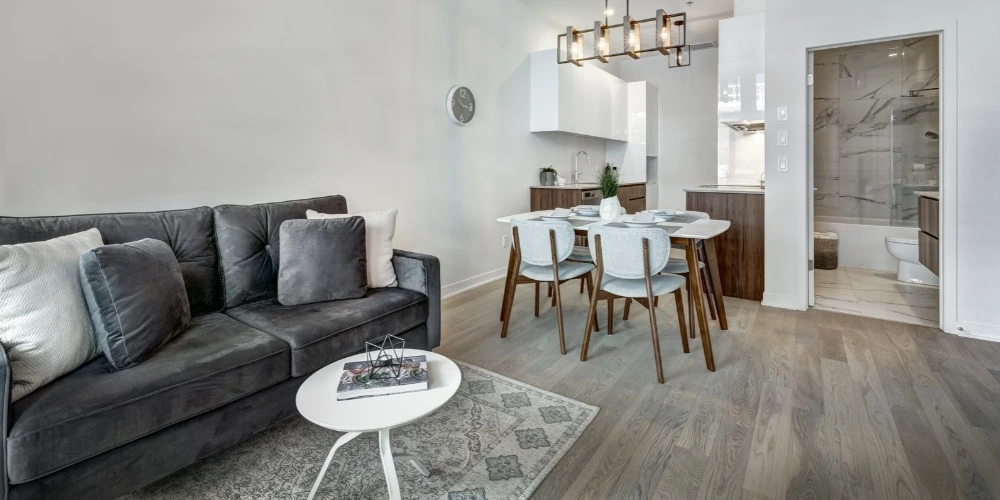
You can get a sofa with a tight back or a single bench cushion, and the arm style can be either track or English roll. The seat should be 22 to 24 inches deep for ease. Legs should be made of plain, tapered wood and not be decorated. A light greige Lawson-style couch in a performance linen is a great example.
Coffee tables from different times. If your couch has a traditional shape, make your coffee table more modern. Picture a square glass table with a metal frame or a round white wood drum table with a marble top. Do not sit on heavy tables made of carved wood.
For dining tables, there is a rectangular table made of solid white wood with smooth, slightly tapering legs. For comfort, put it with upholstered Parsons chairs and add one or two rattan or cane chairs for texture.
Platform bed with a tall headboard that is upholstered in linen or bouclé. You can’t have nail heads or deep buttons. On either side, put stylish nightstands with straight lines.
For storage, Shaker-style cabinets are the best choice for a transitional look. The five-piece recessed panel is classic enough to feel at home and clean enough to look up to date. Hardware: Don’t get too fancy. Knobs or bar pulls made of brass.
Rule: Don’t buy the whole set from just one store. The style should look like it was put together over many years.
Transitional Decor: The Art of Change
Transitional decoration is planned and not too much.
Rugs with low pile and tonal patterns. You could put a smaller wool rug on top of an old, over-dyed abstract wool or natural jute rug. To make sure it fits all furniture, make sure it’s big enough for the front legs.
Art: Either a big abstract picture with soft, neutral lines or a black-and-white photo piece. The frames should be thin and made of black or natural wood.
Extras: Height and number that aren’t even. A large plant in a clay pot, a tall ceramic lamp, and a small marble dish. Do not fill up all the shelves.
Textiles: Linen curtains that are full length and draped high and wide. Pillows: Mix two solids with different textures and a light pattern, like a thin stripe or a small geometric shape. You can only have five seats on a couch.
A look around the rooms
The Living Room of the Future
There is a hybrid style in the sitting area that really stands out. A grey seat can help you center the room. You can add two modern armchairs made of bouclé or a textured material. In the middle, put a stylish coffee table.
Put a big jute rug on top of a lighter wool rug. An arc of brass in a floor light and a set of table lamps with linen shades that go together are very important for lighting. Keep the area above the fireplace neat by putting a single mirror or piece of art there. A transitional living room design has a mix of old-fashioned cosiness and modern airiness.
If you want to get this layout right, follow these living room staging ideas.
The Transitional Kitchen Change
Warm white shaker cabinets, quartz countertops with few veins, and a large island in a deep brown or walnut colour that stands out.
For texture, the backsplash is either plain white ceramic that is stacked or zellige that was made by hand. Fittings made of brushed brass. One part of the open shelf is used for pottery. The pendant lights above the kitchen look like seeded glass mixed with bronze. They are modern but also cosy.
The Transitional Bedroom Change
Don’t get angry. The bed has an upholstered headboard and high-quality white bedding with oatmeal and taupe throws on top. Nightstands that are simple and modern.
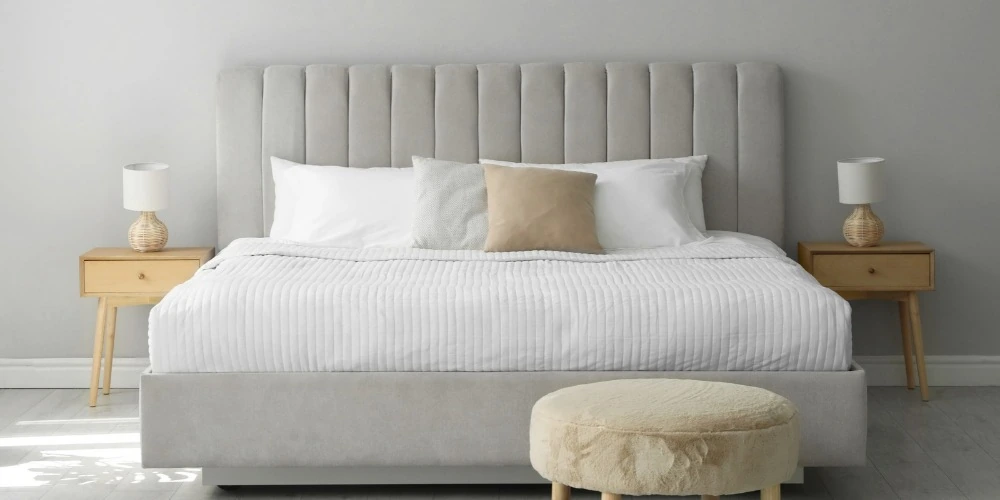
The lamps are big and even. A seat made of leather or boucle at the foot of the bed. No dressers that are a mess.
Learn how to stage a bedroom like a pro to keep it calm.
The Transitional Bathroom Look
Here, Burlington and the rest of the competition are only just beginning to scratch the surface. A transitional bathtub combines traditional shapes with a clean, spa-like look.
Shaker cabinet in greige with quartz top, wall-mounted taps in brushed nickel, big format matte tiles in warm white, and a frameless mirror with a picture light in brass above. The room has clean lines and a deep tub that stands alone. Bring in a teak bench and coloured towels to keep warm.
The Dining Room
Wooden table and padded chairs. One striking chandelier could be a line of frosted glass and brass lights. A simple, natural centrepiece like a porcelain bowl with plants is a good choice.
Lighting is like jewellery for your home
If you want to be a little more modern in a transitional-style home, you can change the lighting. Choose fixtures with warm finishes and clean geometric shapes.
A big linen drum pendant over the dining table, simple lanterns with brass arms in the bathroom and clay table lamps that look like sculptures. Use a variety of lighting types, such as accent (picture lights), task (recessed lights), and ambient (recessed lights).
6 Common Mistakes That Make Your Home Look Like a Furniture Store
Buying a matching set. There is no faster way to kill transitional. Mix brands, times, and types of materials.
It’s all beige and has no texture. It won’t look balanced or interesting if everything is the same flat beige cloth. You need stone, metal, wood, and woven fibres.
There are too many small extras. This puts you back in the real world of mess. Edit with no mercy.
Too many metal finishes are being used. Pick out one main metal.
Ignoring the size. A small rug or piece of art on a big wall makes the space look cheap. You should think bigger than you do.
Forgetting comfort. IIt’s too modern and can’t be changed into something else if you don’t want to read for an hour in the chair.
How to Transition Your Existing Home in 6 Steps
You don’t need to start over.
Step 1: Clean and paint. Cut the things you have in half. Use White Dove or another warm white paint to cover the walls. Instantly makes things brighter and better.
Step 2: Anchor with Neutrals. Cover or reupholster your biggest item, like a sofa, with a neutral performance fabric.
Step 3: Trade a single piece. Change your fancy coffee table for a modern one made of glass and metal, or the other way around. The exchange that makes the mix is this one.
Step 4: Make the lights and hardware better. Swap out the cabinet knobs for brass bar pulls and the builder-grade lights for modern sculptural ones. Cheap, but has a big impact.
Step 5: Add Textures. Put down a jute mat, some linen drapes, and some wool wraps. The fastest way to add depth is through texture.
Step 6: Put in a big piece of art. Instead of a gallery wall, put up one big abstract painting.
Is Transitional Design Still in Style?
Yes, and it will stay important because it’s not a trend. A way to balance ideas that never goes out of style. Transitional style is here to stay because it cares more about comfort, ease of living, and resale value than ultramodern minimalism or maximalist colour saturation, which go out of style all the time. This is the reason why designers still choose it for 70% of new builds.
Frequently Asked Questions
What is transitional interior design in simple terms?
It’s traditional comfort with a fresh look. It keeps the original furniture designs but gets rid of the extraneous decorations. Instead, basic colours and stacked textures are used.
What is the difference between transitional design and modern design?
Modern means harsh, simple, and architectural. Transitional style takes the straight lines of modern style and adds softness, cosy couches, warm wood, and classic proportions to make it more livable.
What colors are used in transitional design?
Warm whites, greige, taupe, and soft greys with just a touch of sage, blue, or clay. It’s mostly neutral, with only 10% of colour.
What is transitional furniture style?
Things that look current but are actually made in a retro way. Roll-arm couches with linen covers, Shaker cabinets, Parsons dining chairs, and coffee tables made of wood, glass, and metal are a few examples.
Can transitional decor work in a small apartment?
Okay. “Clean lines and light colours make small rooms look bigger, and focusing on fewer, bigger pieces keeps things from getting too cluttered,”