
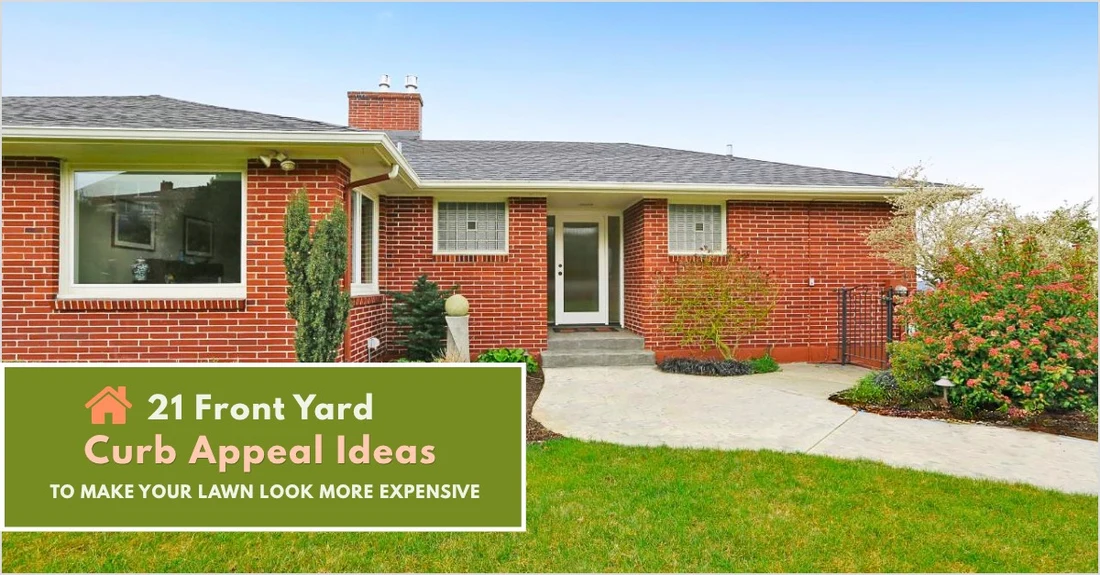
Key takeaways: Landscape curb appeal isn’t about a $30k makeover. We learned fixing our tired, builder-grade front yard that it starts with the foundation — a clean 4-inch edge, 2-3 inches of dark mulch, and fixing drainage before you plant. Then layer plants in tiers, repeat one color from your door, and go heavy on natives. Those small weekend fixes are what make landscape curb appeal look expensive for under $150 and stay low-maintenance.
Want a weekend project? I have some ideas. That’s the season I’m craving the outdoors… that beautiful point between spring and summer when the light is just right before it gets too hot. I also have the itch to do all the front yard items I’ve been ignoring all winter.
A couple of hours just edging beds or power washing the pathway may have a tremendous influence on landscape curb appeal. It really changes things, which is sort of crazy.
We’ve really been going out front more this spring. When we moved in our front yard was very builder grade- you know the look, one row of tiny bushes lined up against the house, piles of mulch, no personality, straight concrete path to the door. Work and just life being hectic, we let it go a little longer than I want to admit. So I was like, well, this month we’re truly gonna repair it. Piece by piece, not all at once, on the weekends.
If you’re looking for methods to improve your curb appeal or just want your house to feel more cared for, scroll through for my 21 ideas… these are the changes that made our front yard look more expensive and didn’t actually cost a bunch. I’m providing extra explanation under each one because I wish someone had explained it to me like that.
Table of Contents
Why Landscape Curb Appeal Matters
I’ll be honest, I didn’t think about it much until we actually started spending time out front. We weren’t trying to sell or anything, I just got tired of pulling into a house that looked… tired.
What I’ve learned is landscape curb appeal isn’t really about impressing neighbors. It’s about how your house feels to you. When the edge is clean and the mulch is fresh and the walkway is actually wide enough to walk on, the whole house feels more cared for. Our front door was the same black it always was, but it finally looked right once the beds around it weren’t a mess.
It’s also the only part of your house everyone sees. People may never see your kitchen or your backyard, but they see the front. Every delivery driver, every friend stopping by, every walk around the block. For us, fixing just that part made the entire place feel more put together, even though we didn’t do that much.
Foundation: Lawn Edging, Mulch and Drainage Fixes
This is the step people skip, then wonder why their plants seem unhappy.
1. First Improve Your Lawn Edging
Not thrilling, but trust me, start here. In the spring my husband and I spend a whole morning edging. We don’t even buy anything but a sharp flat spade and we make a nice 4-inch deep hole all around each bed.
So why does this matter so much for landscape curb appeal? Because it makes a line. Your eye needs a line to tell where the lawn finishes and the garden begins. Without it mulch washes into grass, grass creeps into beds, everything appears chaotic, even if your plants are gorgeous. We skipped edging last year and our beds looked so unkempt all summer long. We did it the first thing this year and everything looks planned, even the ancient plants.
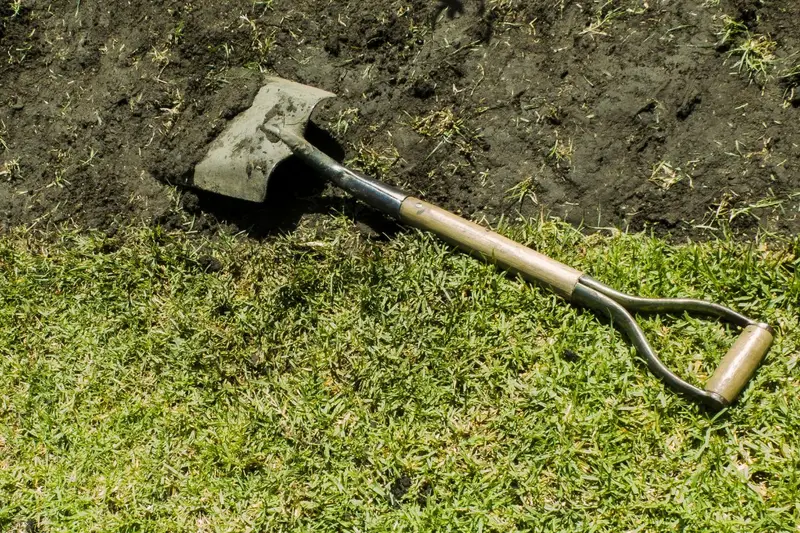
If you are looking for curb appeal front yard landscaping ideas you will notice every gorgeous yard has this clean edge. It takes an afternoon, costs nearly nothing, and it makes you look like you hired someone. I like a natural spade edge, but you may also use steel edging for a more modern line or natural stone if you are cottage style.
2. Refresh Your Mulch the Right Way
I used to buy the bright red mulch. Don’t. It fades to odd pinkish gray after a month and looks kind of fake. We went to dark brown shredded hardwood last year and it maintains color so much longer and really improves soil as it breaks down.
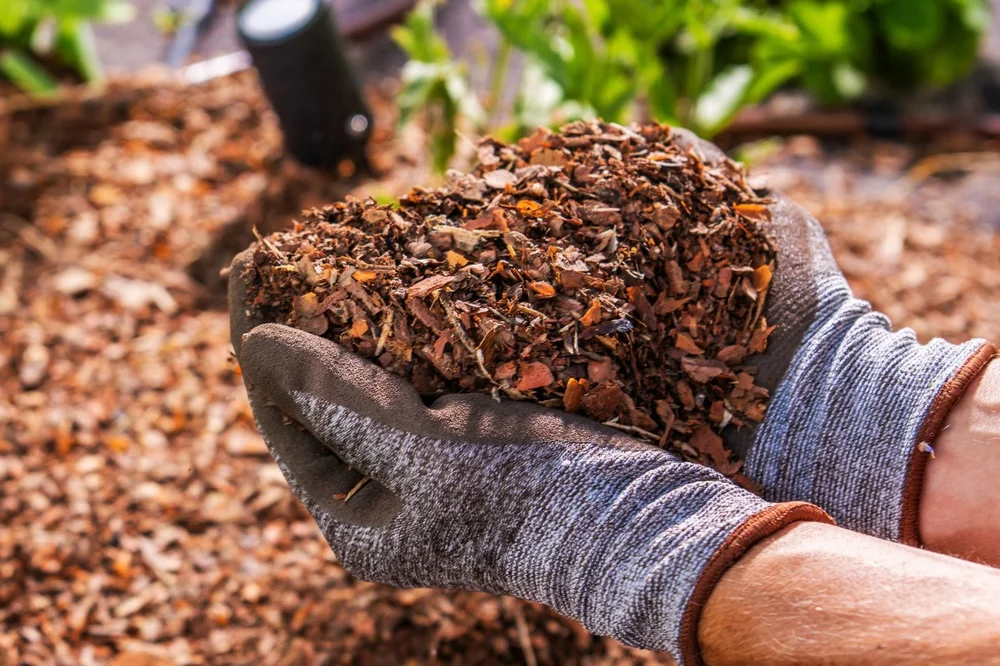
Here is the explanatory portion folks miss. Mulch is not simply decoration. At 2 to 3 inches deep, it holds moisture so you water less, it inhibits weeds, and it makes all your green plants pop due of the contrast. But more is not better. If you pile it 5 or 6 inches deep or weave it around tree trunks, you trap moisture against bark and induce rot. Pull it back 3 to 4 inches from trunks and from your house siding. For like $70 for a couple bags, it was the biggest change for us. One of the cheapest curb appeal landscaping ideas with the most impact.
3. Treat Your Lawn Like a Canvas
Our lawn was spotty. Really spotty, yellow in areas. We were watering a bit every day, which allegedly is the worst thing you can do. It forms shallow roots that burn up in heat.
We moved to deep watering 2 to 3 times a week instead of daily light showers, and we started mowing high, like 3 to 3.5 inches. Taller grass shades out weeds, every excellent lawn person does this. We also aerated this past fall, those small plugs everywhere, and overseeded the thin parts with a little compost on top. In three weeks it filled in.
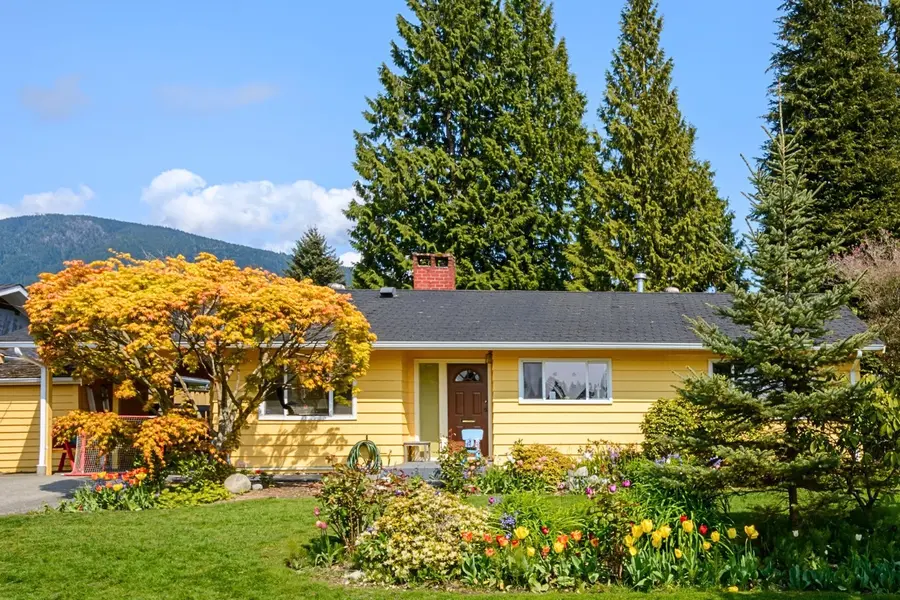
And here is an attitude shift that helped. Your lawn is around 60% of what people view from the curb, but it doesn’t need to be 100%. If you’re not prepared to commit to that much grass, take out 30% of it and build a big planting bed. Water less, impact more, mow less. One of the finest landscaping ideas for curb appeal right now, especially if you have a wide front yard that is really… lawn.
4. Fix drainage and slope before you plant anything
Fix that before you buy one plant if water pools around your foundation after a rainstorm or if your whole yard slopes strangely toward the street. No plant likes damp feet and you will just kill everything.
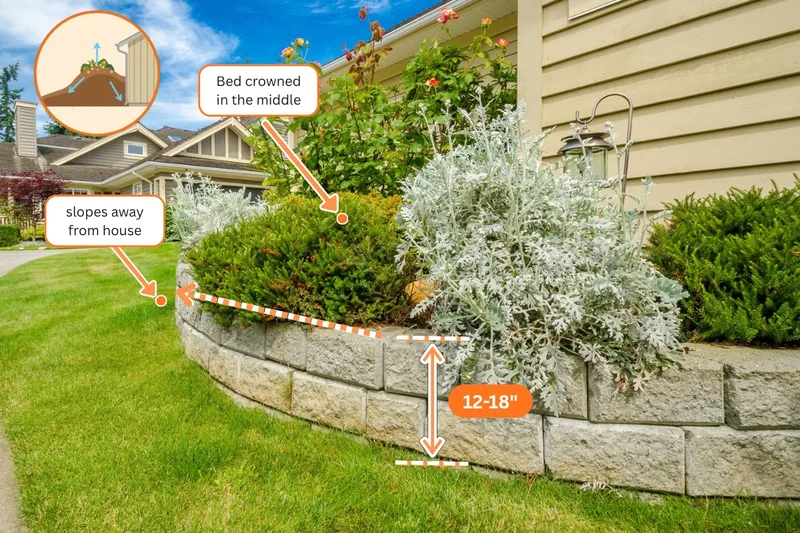
We had a low place in our side yard that collected water. softly crown the beds in the middle, higher in the center than at margins and sloping softly away from the home. If your front yard is quite steep, a low retaining wall, even 12 to 18 inches high, can provide a flat terrace for planting. It converts a hill you can’t mow into an asset.” I’ve seen it totally transform a house on our block. They moved from a hillside they couldn’t mow to two gorgeous layered beds with steps. It looked pricey but was only clever grading.
Living Layer: Planting for Color, Texture and Four Seasons
This is where it gets fun, but it’s also where most people make it look random.
5. Don’t Plant In A Straight Line, Plant In Layers
First mistake, builder-grade: one row of shrubs, all the same size, squaring up to the house like soldiers. Ours was like that. So dull, and when they grow they never look right because they all grow into one another.
It was stacking in tiers that finally made it look designed. I think of it like seats in a theater. Tall back row, 6 to 12 feet, like an emerald arborvitae or small ornamental tree. Middle row flowering shrubs 3-5 feet think hydrangea, spirea, viburnum, things that bloom. 12 to 24 inches, salvia, daylily, catmint, creeping thyme spilling over the edge, low and flowy, front row.
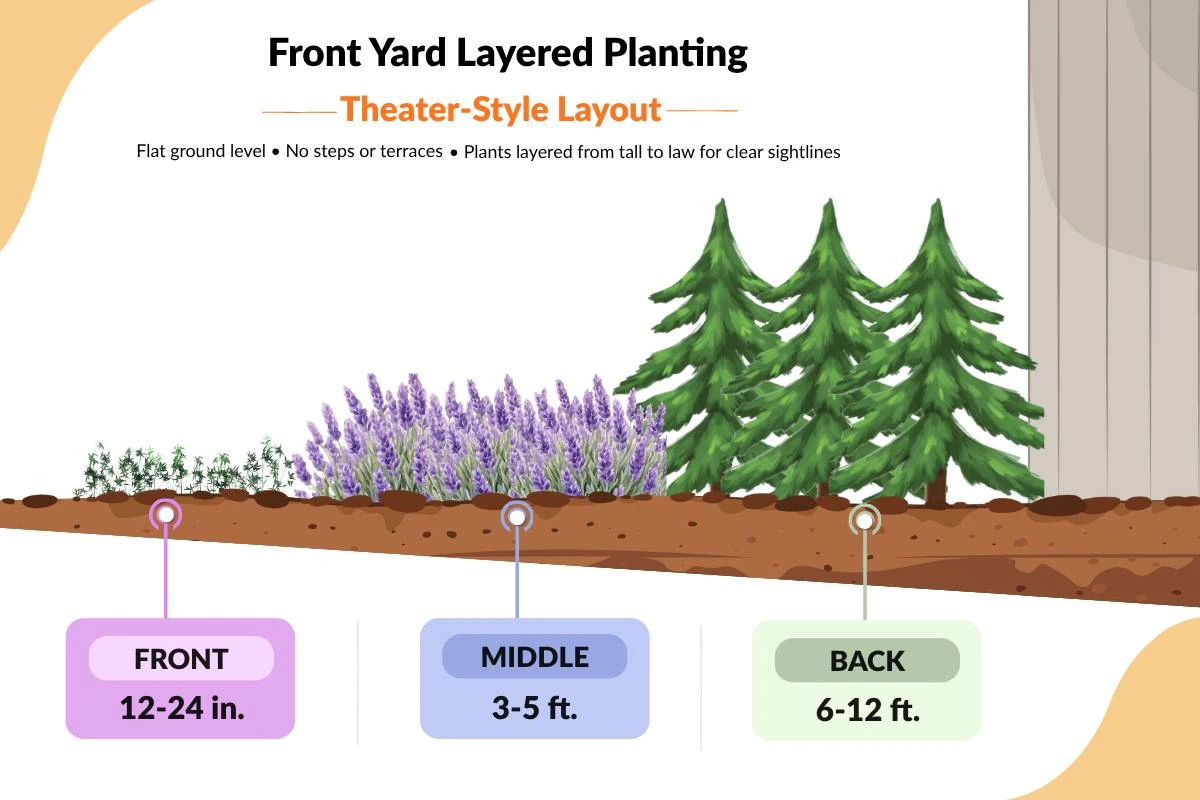
The tiered look adds depth to the street. Now it seems like even our small yard has more space because your eye goes up and back, not just side to side. And season them for what they will be in 3 years, not what they are in the pot today. Check the tag for mature width, and then add an inch or two. That first year you’re going to have empty space, that’s normal.
6. Not only May, think Four Seasons
I used to plant just for spring. By August it was overgrown and by November it was just dead sticks. Landscaping isn’t great curb appeal.
What fixed it was building in good bones for winter Every yard needs something that looks good in January. We added a couple boxwoods for evergreen structure, and we left our ornamental grasses up through the winter instead of cutting them back in the fall. They are pretty with frost and they move in the wind. We also have a river birch that has cool peeling bark, you notice it more in winter when leaves are gone.
Then layer in seasons. Spring daffodils and tulips, summer coneflower and black-eyed Susan, fall color from a Japanese maple or smoke bush. Now there is always something happening.
It is the difference between a yard that looks good one month and a yard that looks good all year, so we started planning with seasonal exterior editing in mind to see how it would look in January vs July.
7. Use That One Color Trick Designers Use
Don’t plant every color in the rainbow. I discovered this from a designer friend and it was a game changer. Pick one accent color and repeat it.
Look at your house. Got burgundy shutters? Repeat burgundy with a Japanese maple, a loropetalum with dark foliage, or heuchera with purple leaves throughout beds, not just in one location. Got a navy front door like we do? We repeated it with blue salvia, Russian sage, and catmint down the sidewalk. If your house is white, white flowers sparkle at nightfall and look expensive.
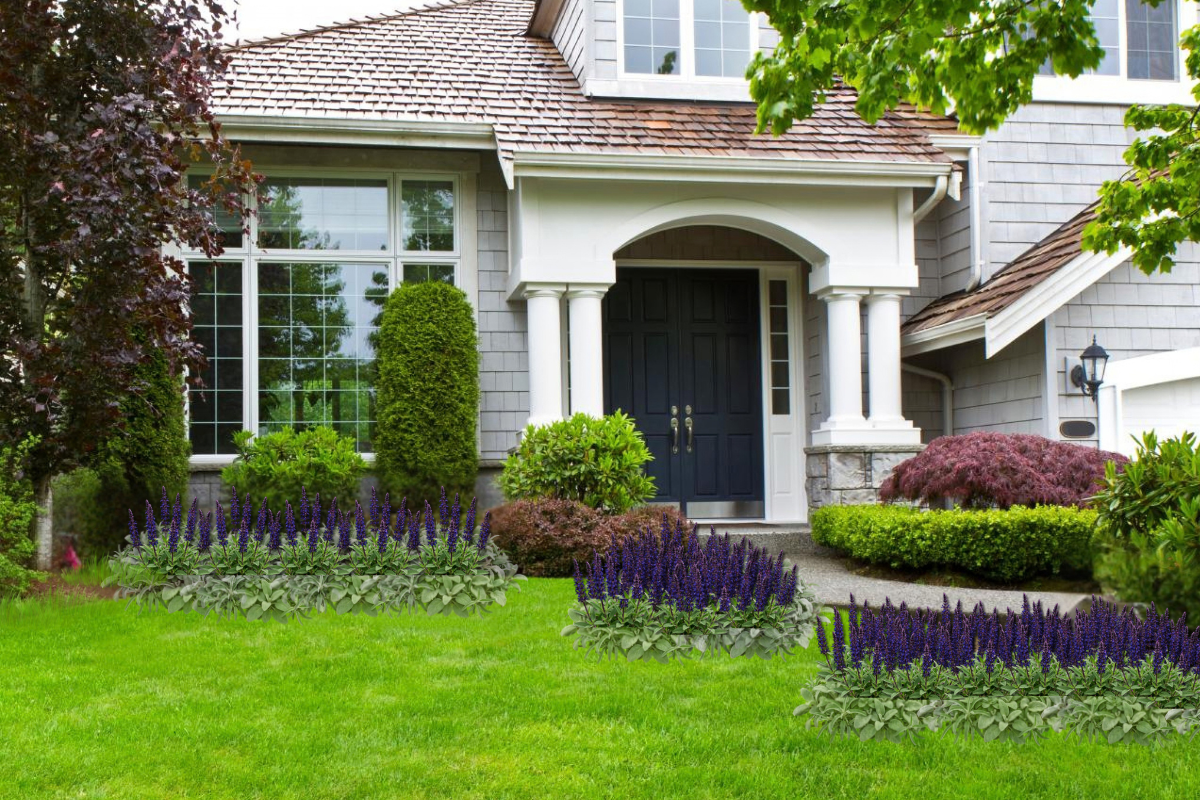
When you repeat one color in at least three areas, your whole yard looks coherent, like you paid someone. It is the easiest curb appeal landscape ideas method and it costs nothing extra, only planning.
8. Go Heavy on Natives and Low-Maintenance Plants
I do not want to be out there every weekend. I have tried that, it doesn’t last.
So we went to our local nursery, not the big box store, and inquired what genuinely flourishes here without babying. We ended up with Echinacea, Rudbeckia, Oakleaf Hydrangea, and Little Bluestem grass as our backbone. They take heat and occasional neglect, and butterflies love them. We threw in a couple reliable perennials like catmint for added bloom time.
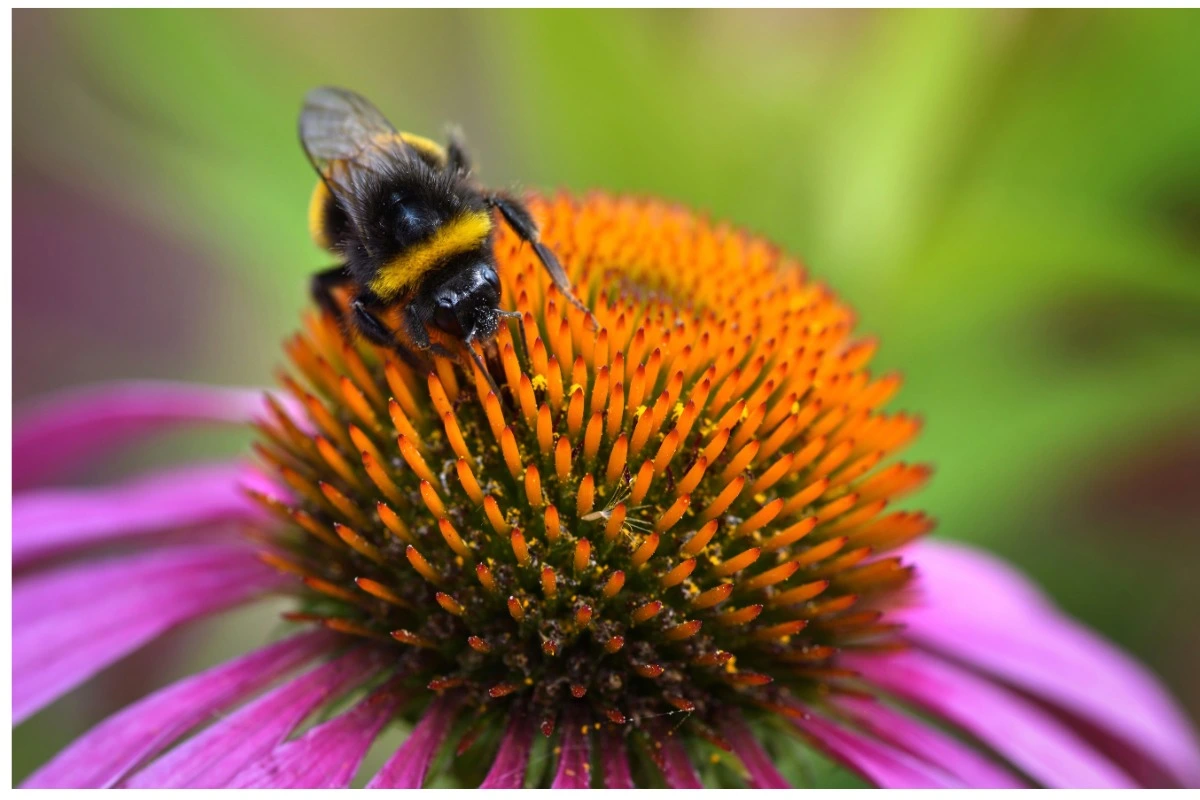
Why does this help landscape curb appeal? Because natives don’t become crispy and unhappy in July. They are tailored to your soil and rain. Less water, less fertilizer, less replanting dead plants. Your yard stays full and healthy, which is what reads as cared for from the street. Ask for 5 to 7 indigenous that genuinely thrive around you.
9. Mix Texture, Not Just Color
All flowers and no texture looks sloppy from the street. I didn’t comprehend this until I saw it side by side at a garden tour.
You need three textures. Fine texture like ferns, threadleaf coreopsis, and ornamental grasses that are airy. Medium texture like hydrangea leaves, boxwood, yarrow. Bold texture like hosta, ligularia, big-leaf hydrangea. Put a feathery grass next to a large hosta leaf. That contrast is what makes it look like a magazine photo, even if the plants are common.
It also produces visual rhythm. Your eye swings between fine and bold. That is what distinguishes simple landscaping curb appeal from the yards that make you slow down when you drive past.
Hardscape Ideas That Make Your Yard Feel Permanent
Hardscape is what leads people and gives your yard permanence. Plants can be moved, stone stays.
10. Your Walkway Is Too Small, Fix It
Our walkway was 30 inches of cracked concrete, straight from driveway to front door, harsh L shape. It was the number one thing bringing us down and I didn’t even realize it.
A decent principal pathway is 42 to 48 inches wide. Two people should walk side by side comfortably, not single file. And add a little curve if you can. A tiny S-curve slows people down a bit, makes the approach feel like a journey, not a runway. It also makes mowing easier because you are not trying to turn sharp corners.
We extended ours to 48 inches with pavers, then lined it with low lavender and boxwood to soften edges. Upgrade material too. Pavers, flagstone, even exposed aggregate looks ten times better than plain gray concrete. If you seek curb appeal front yard landscaping, pathway is always the first thing specialists address. It frames everything.
11. Increase the height of your front door
Our entrance door was merely floating on a level wall. It was lost, especially from the street.
Adding height helps. We added two tall, slim arborvitae on either side of the door, Emerald Green, they stay narrow and don’t get large. Later my husband erected a basic arbor, nothing extravagant just cedar. We placed a clematis on it, I chose a white one because it flowers long and is relatively low care. Suddenly there’s a verticality to our entrance.
You could construct a trellis or pergola near entry too. Roses growing or jasmine will adorn. It tells you you’ve arrived, it tells you where to go, and it makes a low house look taller.
12. Build Levels From Stone
On our flat lot, a little stone went a long way. “We had a random tree in the middle of grass, lonely, with a little ring of mulch around it. Appeared unhappy.
We put a piled natural stone edge around it, made the bed bigger, like 5 feet wide and planted around it. Now it is a bed of focus not a lonesome tree On a slope, a low retaining wall of natural stone serves two purposes: it holds back dirt and provides a lovely chance for layered planting.
Just be consistent with your rock. We adhered to one family, all gray limestone, and it looks so much more intentional than mixing gray flagstone, red brick, and yellow sandstone all together. Pick one and repeat it, same like you do with color.
13. Have One Wow Moment
Every yard that stops traffic has one element that makes you look twice. Just one. Not ten.
Ours is a Japanese maple in the corner, near the curve in our walkway. It could be a bubbling rock fountain, a mature hardy hibiscus with those gigantic dinner plate blossoms that become 8 to 9 inches broad, or even a gorgeous boulder you found. Place it where your eye naturally ends, along the curve or centered on a window. Not jammed up against the house so you can’t see it.
One strong centerpiece trumps 10 tiny decorations and gnomes. Provides a resting area for your garden curb appeal.
14. Conceal the Ugly Things
We all have it. AC unit, trash bins, electric meter, hose reel. Our AC, right in front. Buzzing away.
We opted for a basic screen of cedar with star jasmine on it, and a row of 3-foot boxwoods in front. It screens the eyesore, and it adds green. It’s one of those curb appeal landscaping suggestions that looks so tiny, but it makes photos appear so much better, especially if you ever sell. We almost got the cedar screen style but ended up creating ours due to our apartment being an unusual size. If you need something quickly, you can also use lattice with evergreen clematis.
Lighting and Finishing Details Most People Skip
If it just looks good at noon, you’re losing half the day. And the illumination is safe.
15. Your Light Layered
Your yard should also look good at 9pm, which is why we looked into twilight photo conversion to show how the warm lights actually glow after sunset.
We had no lights and at nite our house just disappeared, dark and kind of scary.
We did three types and it made all the difference. Path lights every 6-8 feet along the route. Solar is perfectly ok if you obtain decent ones. No wiring required. Uplights at the base of our tiny maple and at the base of our stone column aiming up for drama. And a light step for safety on our one step up to the porch.
We decided with warm white, 2700K, it is pleasant, not that harsh blue-white that appears like a parking lot And we’ve made the entrance door the brightest area a little brighter than usual. It beckons to tourists, unconsciously, come here. It also discourages trespassers as there are no dark corners. Here’s how you achieve real landscape curb appeal after dark.
16. Change Your House Numbers, Seriously
This is a $40 repair that made us look like we renovated. Those little brass numbers from ’92? Out.
We replaced them with large, modern, matte black numbers, enormous, mounted on a piece of stained wood we had left over from our shed installation. We found a matching modern mailbox and new porch light, similar finish. Little things, yet they show this home is loved and modern.
I chose timeless outdoor lighting, and here is my designer guidance I employed. We have also recently placed fence post solar lights in the back, not only useful but they provide ageless elegance. providing the numbers we used. They are budget friendly and so much better than what was in there
17. River Rock Where Mulch Washes Away
We had a place beneath our downspout where mulch always washed away after a big storm. So bothersome we kept changing it.
We put in that small area with river rock and a good weed cloth underneath. It remains put, looks sharp, and connects our concrete to planting areas. We kept one size and color, don’t mix five different rocks, that looks crowded. It is great for modern homes and cuts down on mulch replenishment every year. We also utilized pea gravel for a short path to our side gate, same principle.
18. Don’t Forget the Driveway Edge
Everyone focuses on the front entrance and forgets the driveway. We did too for a long time.
We put a cobblestone border along the perimeter of our asphalt driveway and lined it with modest solar path lights. We installed two identical pots at the entrance, enormous ones, with boxwood in them. It frames the whole home and makes it feel bigger and more expensive. It defines the space and provides your yard a degree of polish you didn’t know it was missing.
The Final 10 Feet: Porch and Entry Ideas
This is the most crucial part, because this is where people actually stand.
19. Planters Are Your Secret Weapon
Curb appeal front yard design ends at the porch, and planters provide you fast, changeable color. I’m a huge lover of window planters and large pots because they are enjoyable to change out for the seasons and offer instant charm.
“Thriller, filler, spiller is my formula. Thriller is tall and upright in the middle, like purple fountain grass or cordyline. Filler is mounding around it such as coleus, impatiens, begonias. Spiller out of control, sweet potato vine is my favorite, gets wild by end of summer.
We do two matching huge pots on either side of the door for symmetry, classic and always looks wonderful. If you have a small porch, one large dramatic pot is better than three little ones that look cluttered. Replace annuals for a new look each season.
20. Make Color Pockets Where It Matters
You don’t have to have your entire yard with flowers. Trust me I tried, it’s expensive and tiring to maintain.
We plant color where people actually look. Mailbox area, corner where driveway meets street, and the foundation bed closest to front door. These small pockets do 80 percent of the job. Use annuals for affordable, vivid color you can modify.
White petunias with blue salvia is classic and always looks fantastic. I decided with hot pink begonias this year with lime sweet potato vine because I wanted cottage charm. For a sleek and clean look, use one type of flower in just one or two colors. For English garden style, pack many distinct varieties and colors in closely.
21. Keep Organized With a 15-Minute Rule
Here’s the truth no one puts in blogs, or at least not honestly. The nicest landscaping curb appeal ideas in the world look dreadful if they are untidy.
We set the timer. Twice a week, 15 minutes. Weed, trim where grass intrudes, sweep the path, cut back dead blooms. We shape shrubs once a month, but we don’t shear them into perfect meatballs, we preserve their natural form, simply tidy. Keep shrubs trimmed to the same size for a uniform look. Usually no taller than waist high in the front.
Yards should be simple and tidy, not fancy and overgrown, which is why we now follow a real estate photo editing checklist before taking any front yard photos. It is what sells curb appeal in landscaping, not how much you spend.
Front Yard Curb Appeal on a Budget
Some of the highest impact upgrades you can make on a budget are fresh mulch, front door paint, pressure washing the pathway and siding, and new house numbers. We did all four for less than $150 and our neighbor actually stopped and asked if we got new landscaping.
What’s the Best Front Door Color for Curb Appeal?
Classic colors like black, navy, deep green, and charcoal tend to have the largest appeal and age well. We used Tricorn Black on our exterior doors, same as our internal doors, and I adore it. It goes with everything.
The homes with the most exterior appeal aren’t typically the biggest or the most expensive. They are the ones that feel cared about. Focus on a few sensible changes, pay attention to details, and let your home’s architecture do the hard work. That is generally where the best aesthetic happens.
Do you have any other tips for increasing curb appeal? I’m love fiddling about outside recently, and will gladly add additional chores to my list.
One large thing we would love to do next is to test a virtual renovation for that tiny seating area out front by our maple before we build it.